Bike body
The machine is its own mass, with the engine, gearbox, suspension and the way power arrives at the wheel. A 250F and a 450F do not share that model.
Two masses
You do not steer a single weight. The bike is one physics body and the rider is another, and the workshop only names the settings that move with those two.
The machine is its own mass, with the engine, gearbox, suspension and the way power arrives at the wheel. A 250F and a 450F do not share that model.
The rider is the second mass. Shift it to lock the front wheel into a rut, load the rear for drive out of a berm, set pitch in the air, and throw a whip or a scrub.
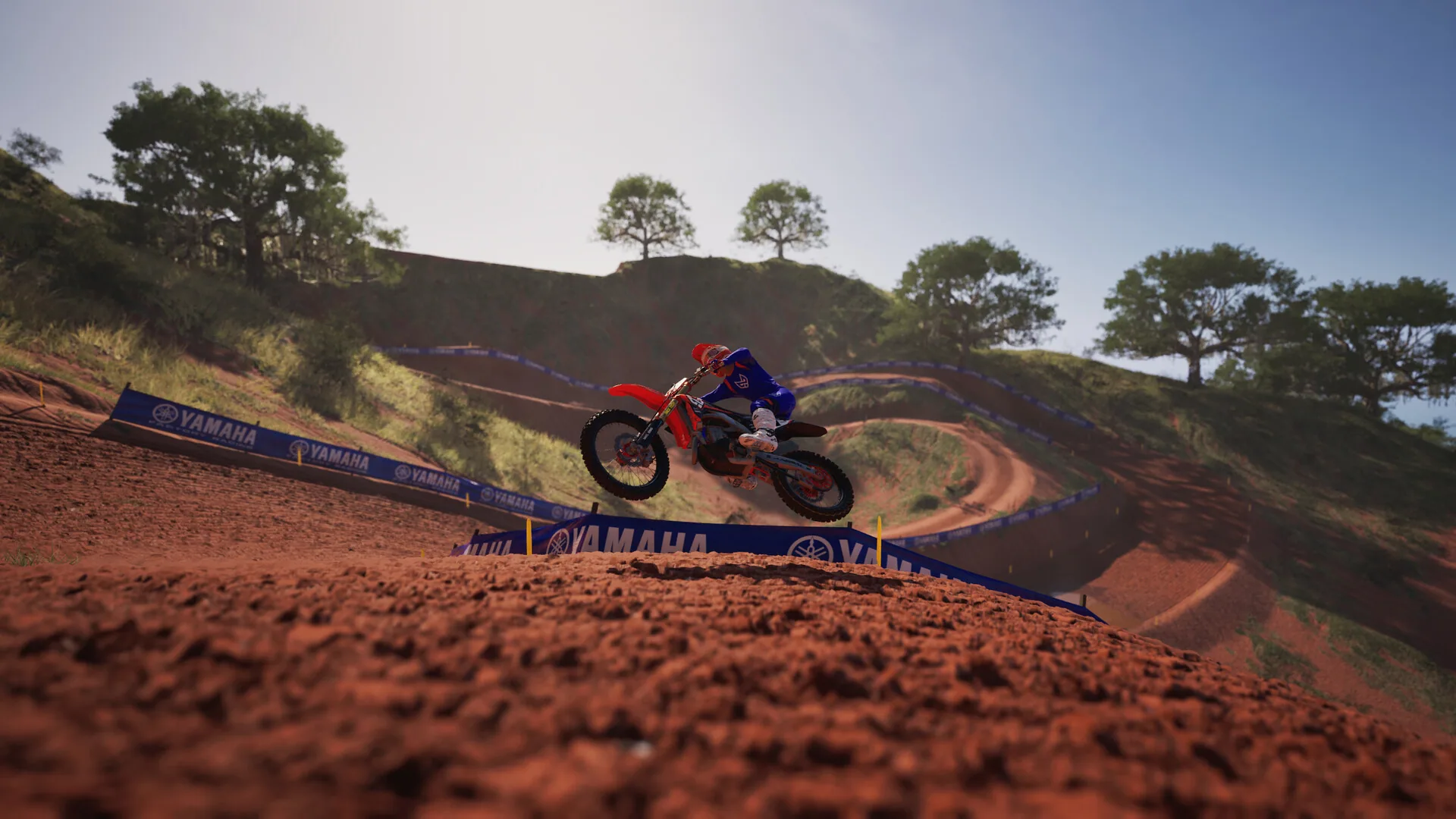
Bike and rider stay two separate physics bodies through the rut, the berm and the air. Moving the rider is an input. The bike's mass keeps its own line when the rider shifts.
The 250F and the 450F each get their own engine, gearbox, suspension and power-delivery model. They ride as two different bikes, so a class change is not a paint change.
In the workshop, tune gearing, suspension and tyre pressure for every layout. Adjustable rider assists cover weight transfer, throttle and clutch. Turn them down one by one until it is just the two bodies.
| Piece | In the current ride | Still to add |
|---|---|---|
Bodies | Bike and rider are separate physics masses. | Further bike physics and handling work is planned. |
Class models | 250F and 450F keep separate engines, gearboxes, suspension and power delivery. | Licensed OEM bikes are an addition, not a third class in this table. |
Workshop | Gearing, suspension and tyre pressure are the named settings. | Those three settings have no published click value or formula. |
Assists | Adjustable rider assists cover weight transfer, throttle and clutch. | Turn the assists down until the ride is only the two bodies. |
Dirt | Each layout already asks for its own lines and braking points. | Dynamic terrain deformation is still planned: ruts, braking bumps, and how the track changes during a race. |